
Events: The Great North 2026
Having just read the Velo News post proclaiming East Coast gravel [racing] is falling behind, I thought it odd as I lined up in Cambridge, NY, with dozens of other eager riders for Anthem Tours’ The Great North. We were about to be released onto the long course, a seventy-mile route that features 40% unpaved roads. Many riders were here for the challenge while some were gearing up for Anthem Tours’ larger race - Battenkill Race, also centered in Cambridge, in four weeks. I had driven the three-plus hours from Philadelphia to be in the historical hamlet of Cambridge specifically to add almost the entire route’s distance of new-to-me roads. So you can understand my confusion of the misinformation that East Coast gravel is falling behind when we bounded away from the start in unison, some locals, others having hoofed it from afar.
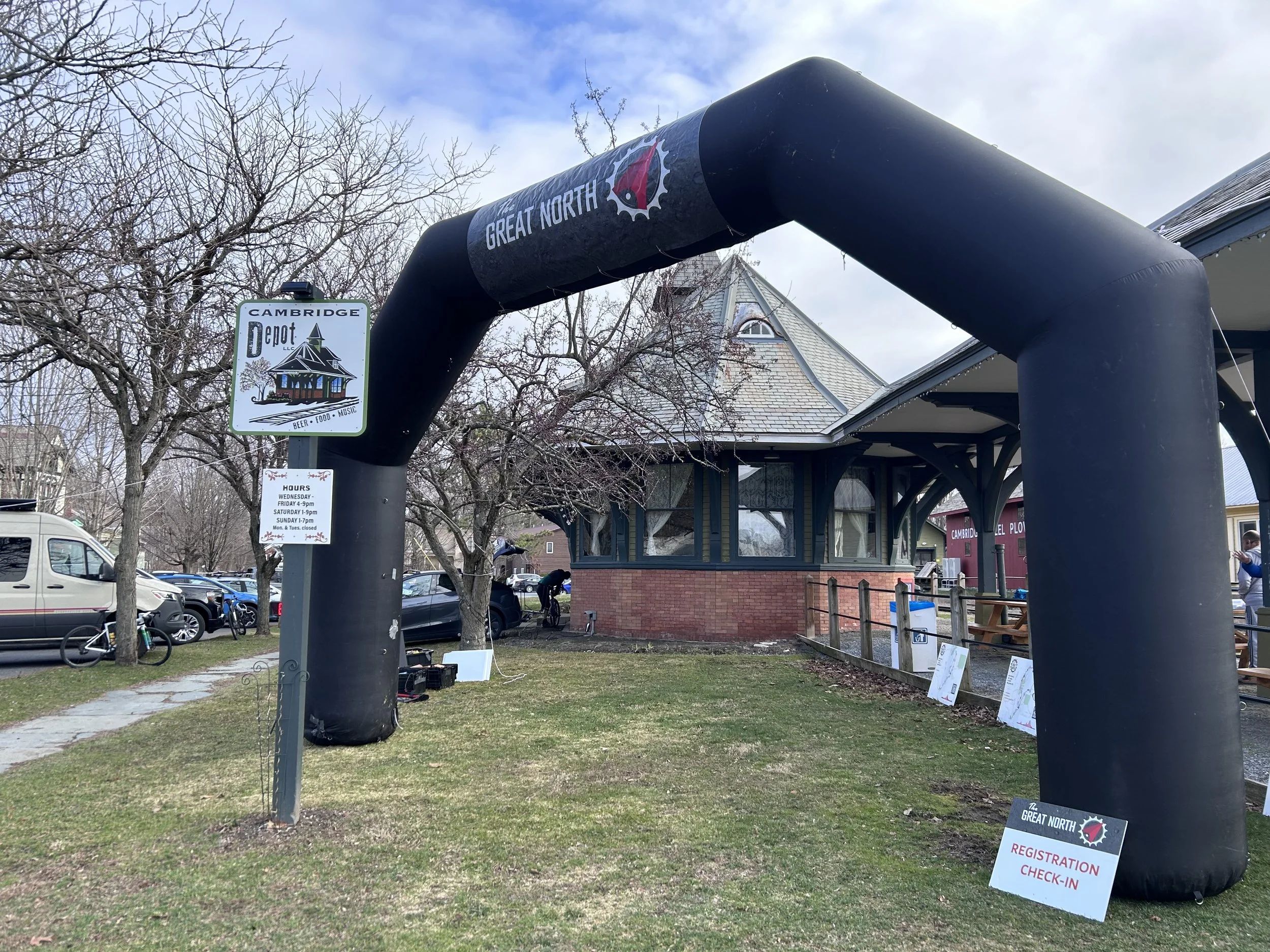
The Great North starting arch in downtown Cambridge, NY.
This was my first time at The Great North. Having raced in the Tour of the Battenkill/ Battenkill Race several times, luck oriented me to the Upstate New York town on the first Saturday in April. I took two gambles on this event: the weather forecast looked poor as usual, and the road bike was selected over the gravel-specific. Luck bent in my favor both ways. The rain never came and the unpaved roads of Washington County were as smooth as any paved road in Pennsylvania. After all, the Giant TCR had been a reliable steed in the Battenkill Race last year, why not bring it back for The Great North?
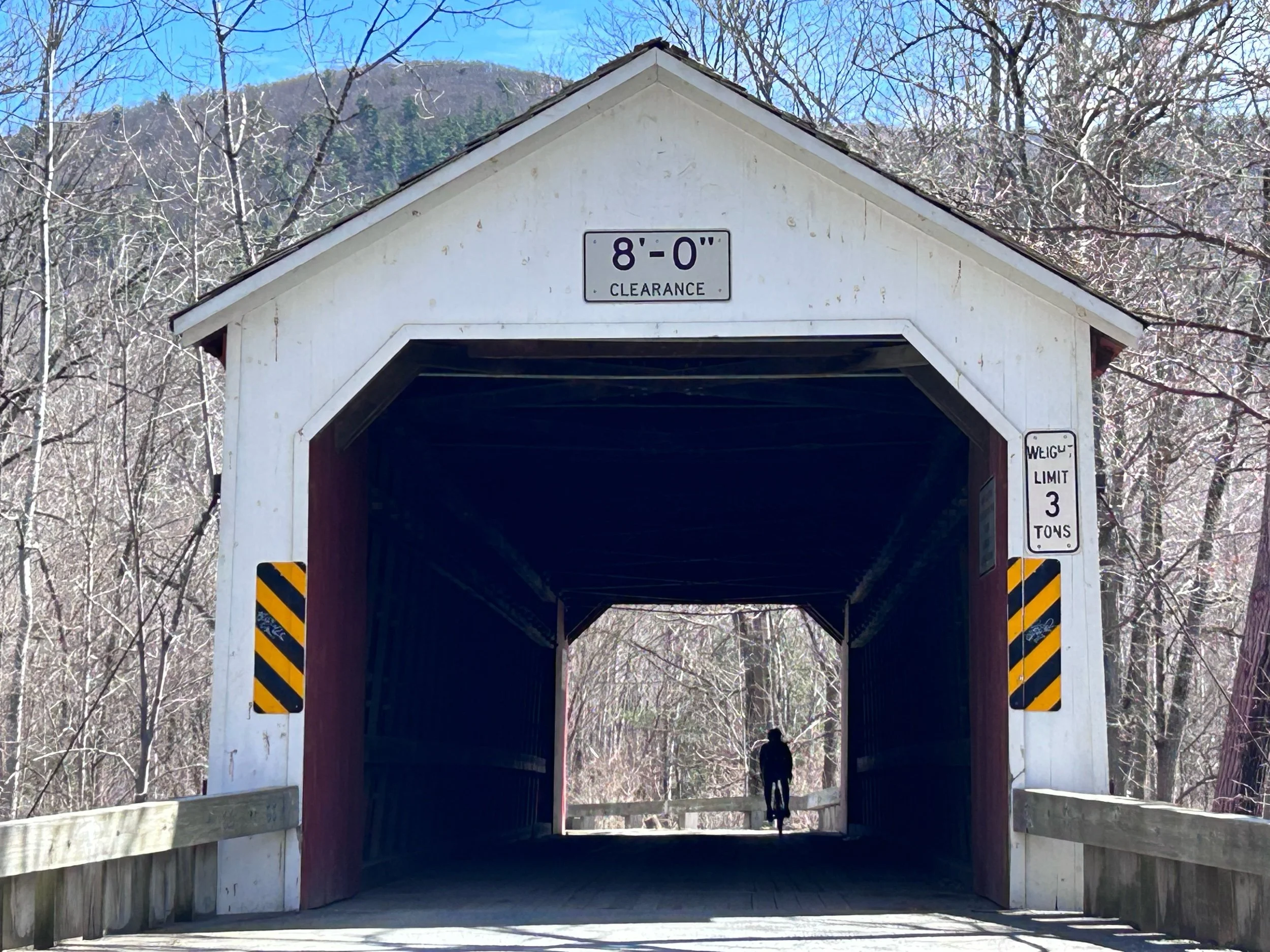
I did have my reservations at the starting line. I was one of two road bike riders amidst a gaggle of deep dish 50 mm gravel wheel sets. I relied on previous experience of unpaved New York roads, but the final miles of The Great North went into Vermont and then climbed an absurd gravel road. Would I regret a road bike at that time? Or would I find frustration on the paved portions with a gravel bike? The early miles supported my decision as we threaded our way through Eagleville Covered Bridge to mark the proverbial start to The Great North. To those who have ridden Battenkill, the route went left after the covered bridge.
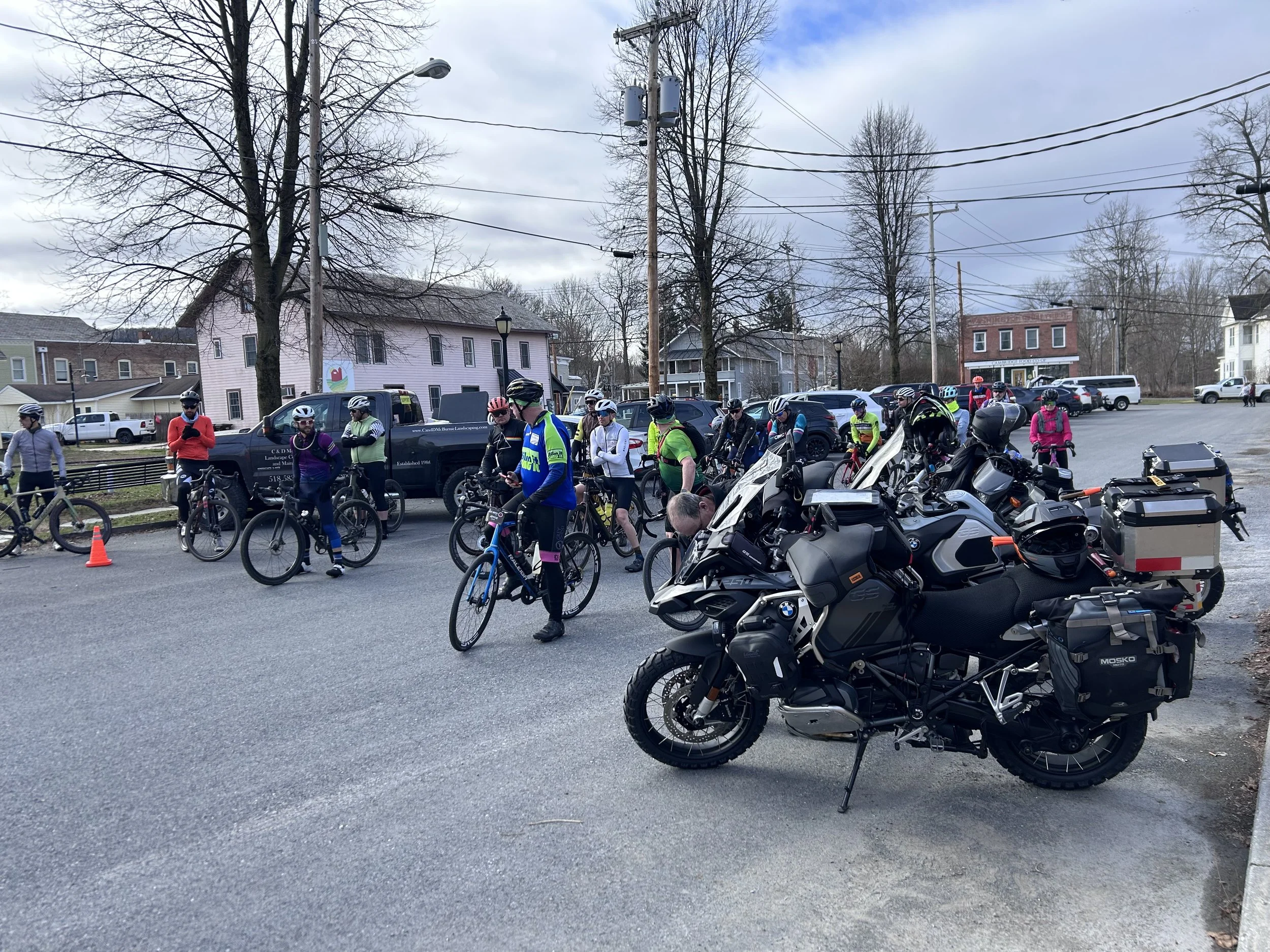
The seventy-mile start and three support motos.
As standard, those with gravel bikes left me in the dust as soon as we hit Binninger Road, the first unpaved sector. Having just ridden the Hell of Hunterdon the week before, I was more interested in taking in the scenery of Washington County rather than try to keep up with the lead pack. Climbs came early as the route linked up with the next gravel sector, Rich Road, a climb that would bypass the infamous gravel uprising of Juniper Swamp but put us on the road nonetheless. To develop my earlier gravel point further, we were twelve miles in and had already covered six miles of unpaved roads. It was the link-up with State Road 22, the paved portion, that allowed me to believe I had made the right call using a road bike. The swirling spring winds sent me sailing from Salem to East Greenwich.
It was an adjustment to tackle the New York hills compared to the southern New Jersey climbs from the week earlier. Instead of brute force ramps of thin New Jersey roads, Washington County climbs were more gradual and stepped. That’s not to say they were easy, it means the hills were rhythmic. The middle portion of the route bumped its way along, even rounding Cossayuna Lake, a surprising sight after so many forested areas and farmlands. Once around the lake, the long route was roughly halfway completed.
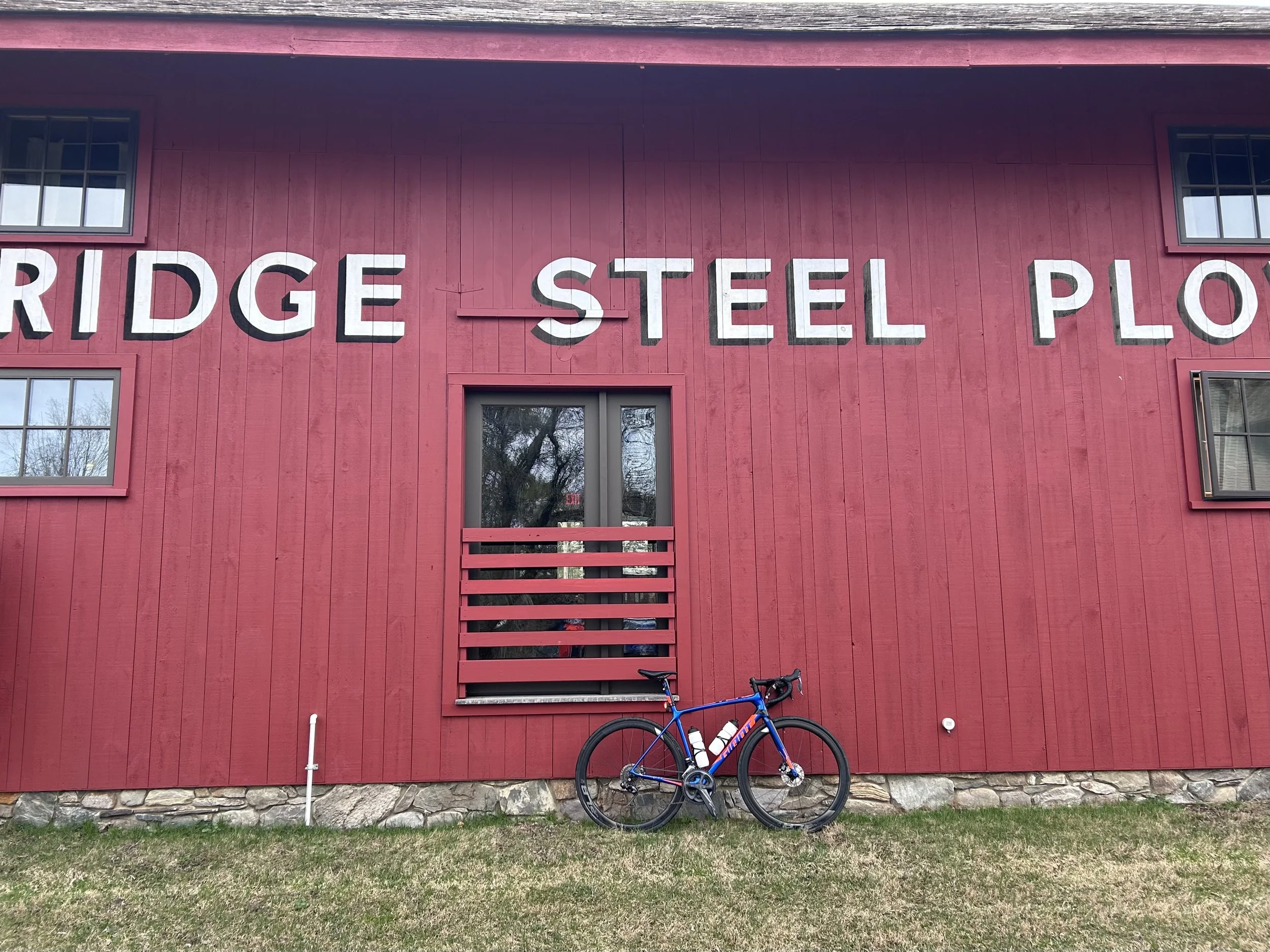
The vistas along the route were something to remember. Although 40% of the route is unpaved, it felt like an equal percentage of the course was lined with maple lines collecting sap to be boiled into syrup. And that’s no exaggeration. There were dozens of little farm stands selling maple syrup through the honor system. One gravel road had a fairy tale feel as new growth trees prospered. The coniferous forest was the densest I had gazed upon outside of an Adirondack hike. At one point, I met up with one of the event's moto supports and said how beautiful the views were. He agreed, saying he had selected that specific area to pull over because of the panoramic beauty.
But there were some moments of raw experiences. The route passed numerous dwellings of limited means. Out back were either porta-potties or an outhouse. The occupants were of limited means. Buzzing by on bikes while out for a recreational event felt like an apprehension of how some residents live in the area. Even the farmers along the route seem like people both parties of government have forgotten about. Meanwhile a few meters down the road, and a huge house would command a distant hilltop. The gravel roads of the area certainly give back in feelings of thankfulness.
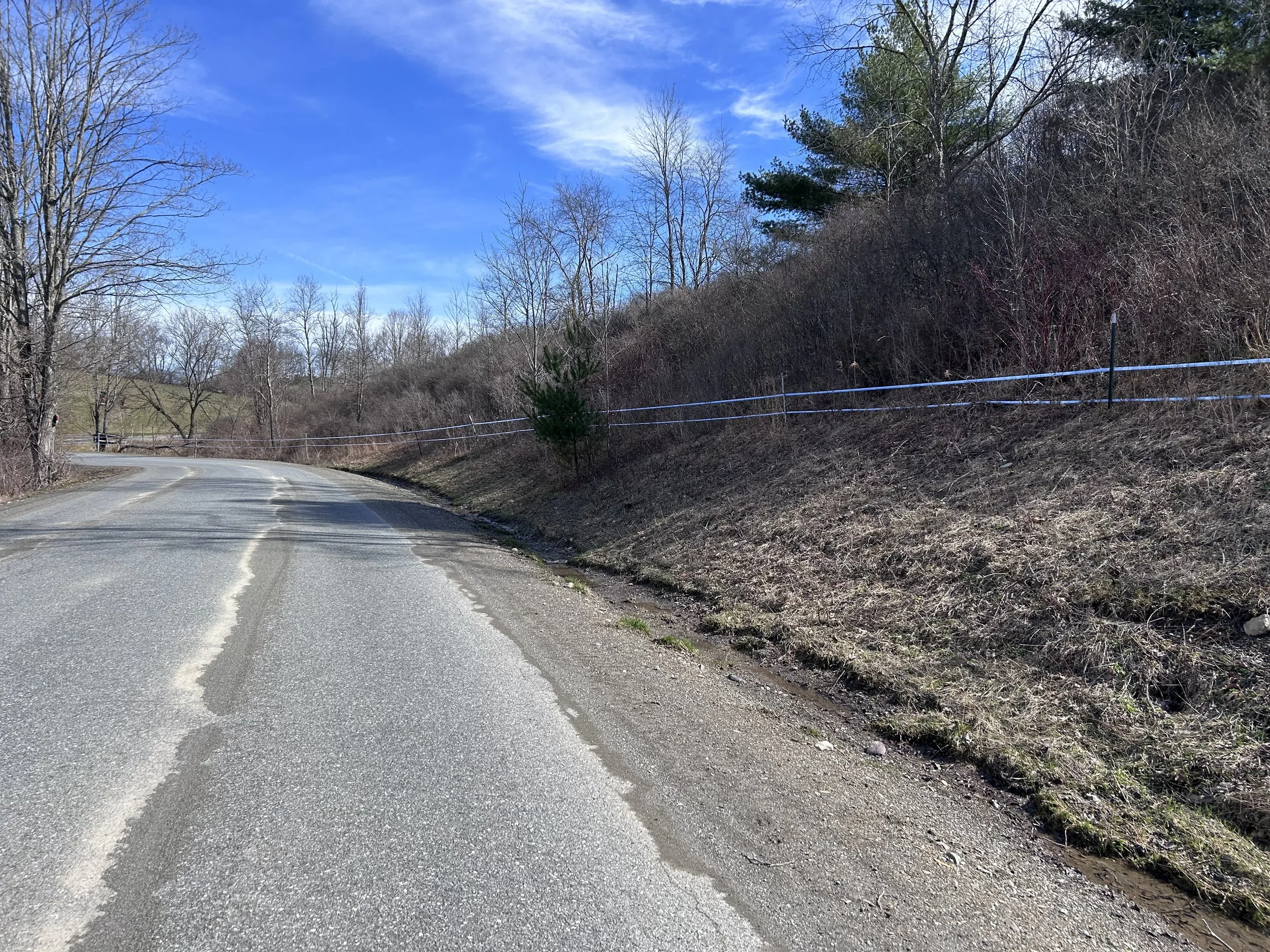
Maple sap collection lines paralleling the roadways regularly during The Great North.
We continued to pass through quintessentially upstate New York towns. Think a central white church with a commanding steeple flanked by dozens of houses, a business here and there, and a rec center. As quickly as it approached, we were out of the town limits again. Yet the odd sense of everyone suddenly being elsewhere was felt. Not one person was out of their house, but all the doors and windows were thrown open. For a day to progress from forecasted rain to balmy sun, there weren’t people walking down the sidewalks or starting the seasonal yard work.
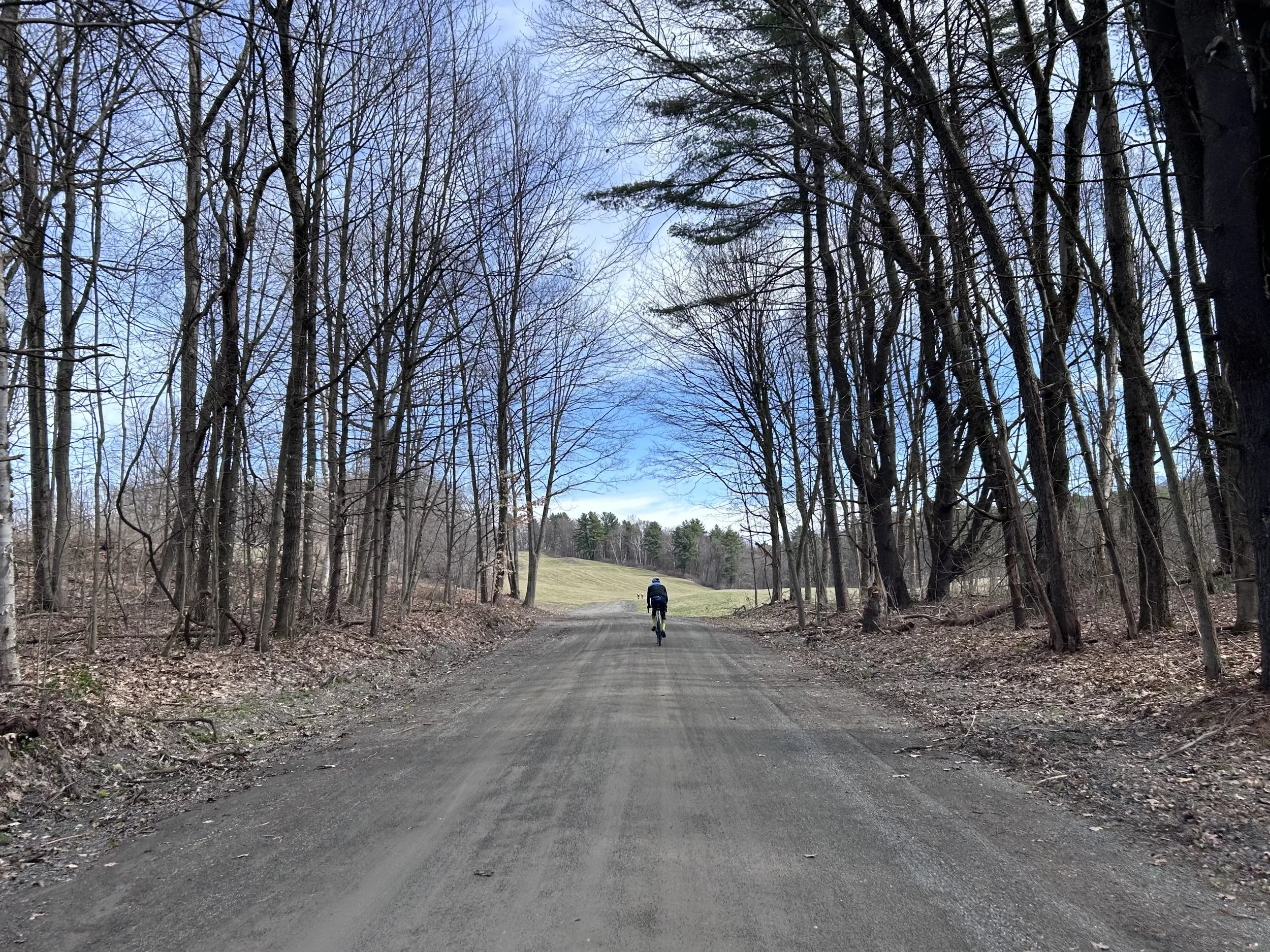
I wish I could remember some of the road names, but the gravel was perfect.
Anthem Sports also directs the Tour of the Catskills, a seventy-mile route with a beast of a climb at the end. I have finished the Tour of the Catskills several times, so what came next was due to my neglect. The route profile was not studied long enough, especially as it crossed into Vermont and turned onto Sandgate Road. What Sandgate Road hid in its wooded wholesomeness was a 3.5-mile gravel climb that gained 800 feet of elevation. My Garmin’s screen mimicked the Artemis II rocket launch from earlier in the week - it simply went straight up. It was getting close to the time the road bike selection would issue my first struggle. Meanwhile, the Cadex Classic tubeless tires held their own on the crumbling uphills. In some areas near the top of Sandgate Road the incline hit 15%. It was the rounded top of the climb that came into view on my Garmin that encouraged my upward progress, not the nearness to the summit. I was cooked. I was close to dismounting and scolding the road bike, but the top came into view as well as the sound of a pond of bullfrogs croaking.
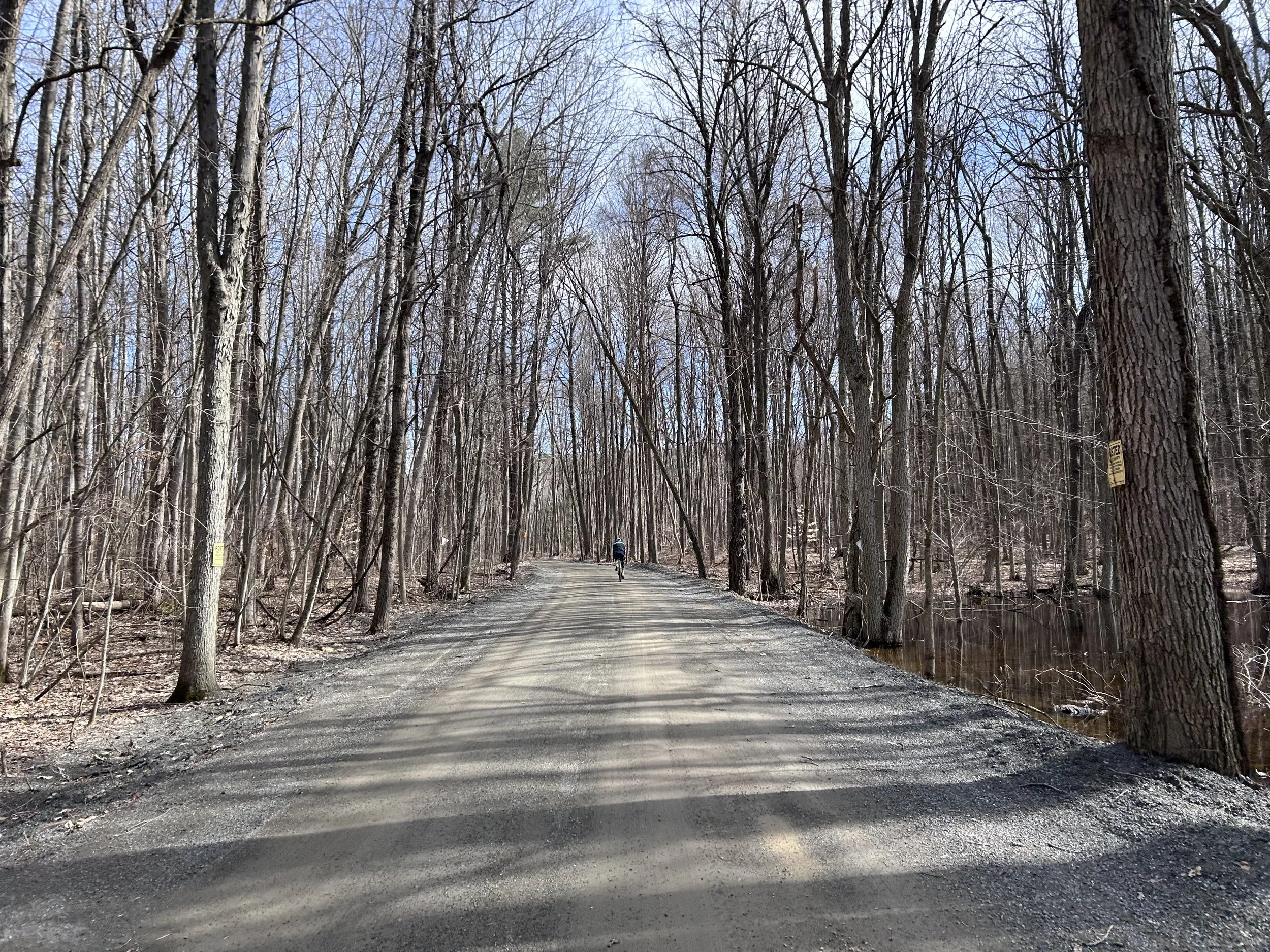
For all I knew about drainage, Sandgate proved me wrong. Once at the top, the relatively firm unpaved roadway became sticky peanut butter. The thin road tires struggled to find suitable passage. At this point it was a plunge back to New York, but the molasses of the descent, plus the patchwork of loose limestone gravel urged caution. I couldn’t even take advantage of reentry after toasting myself on the ascent. I buzzed past a casual sign that announced our return to New York state.
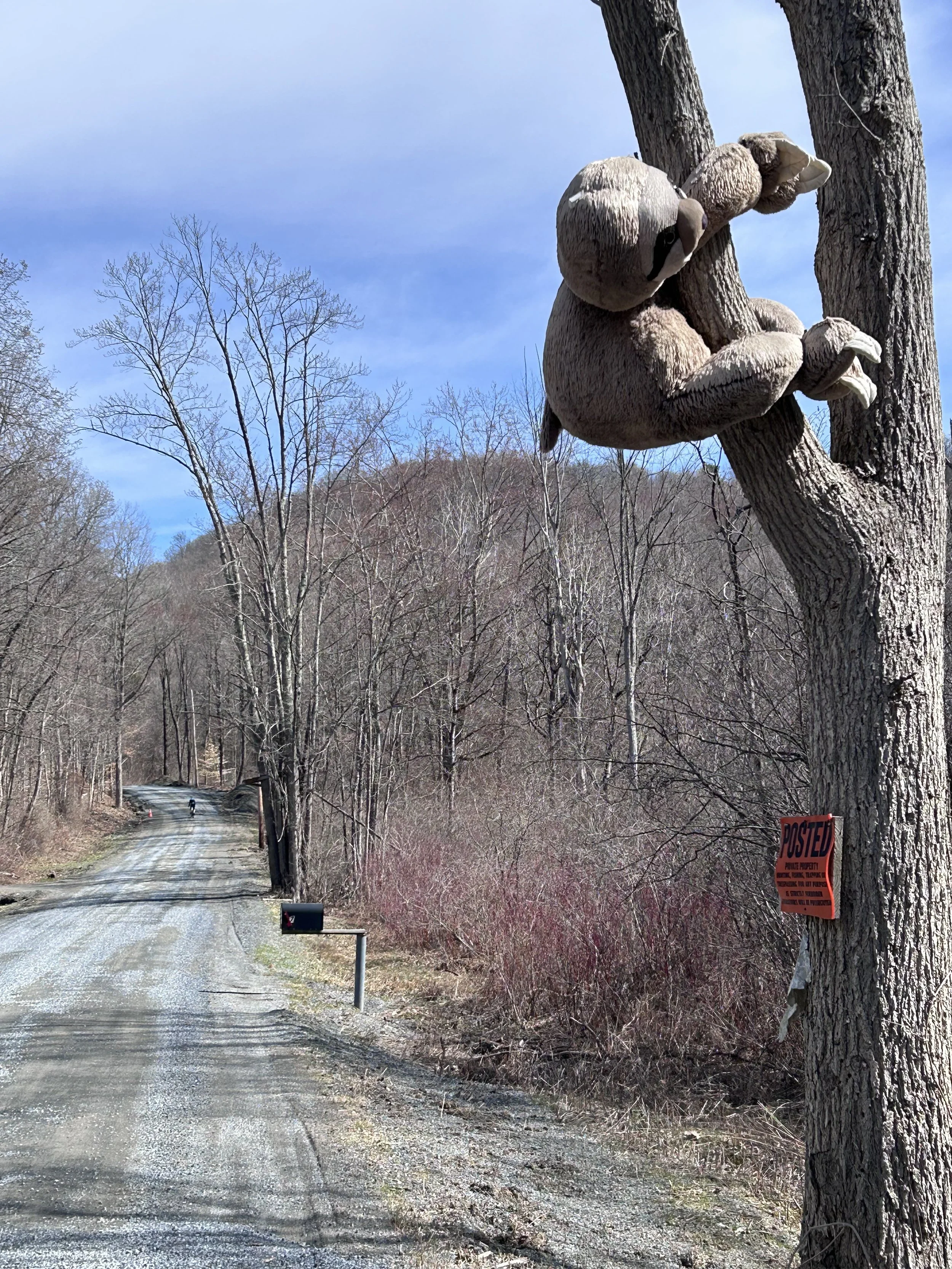
We passed through Eagelville Covered Bridge on our return to Cambridge. The final six miles were always considered in the bag, but I was struggling. A bonk was not far off. Unceremoniously I returned to Cambridge, stopping the Garmin precisely at 70 miles, right where I had started less than five hours earlier. It felt great to have accomplished The Great North for the first time.
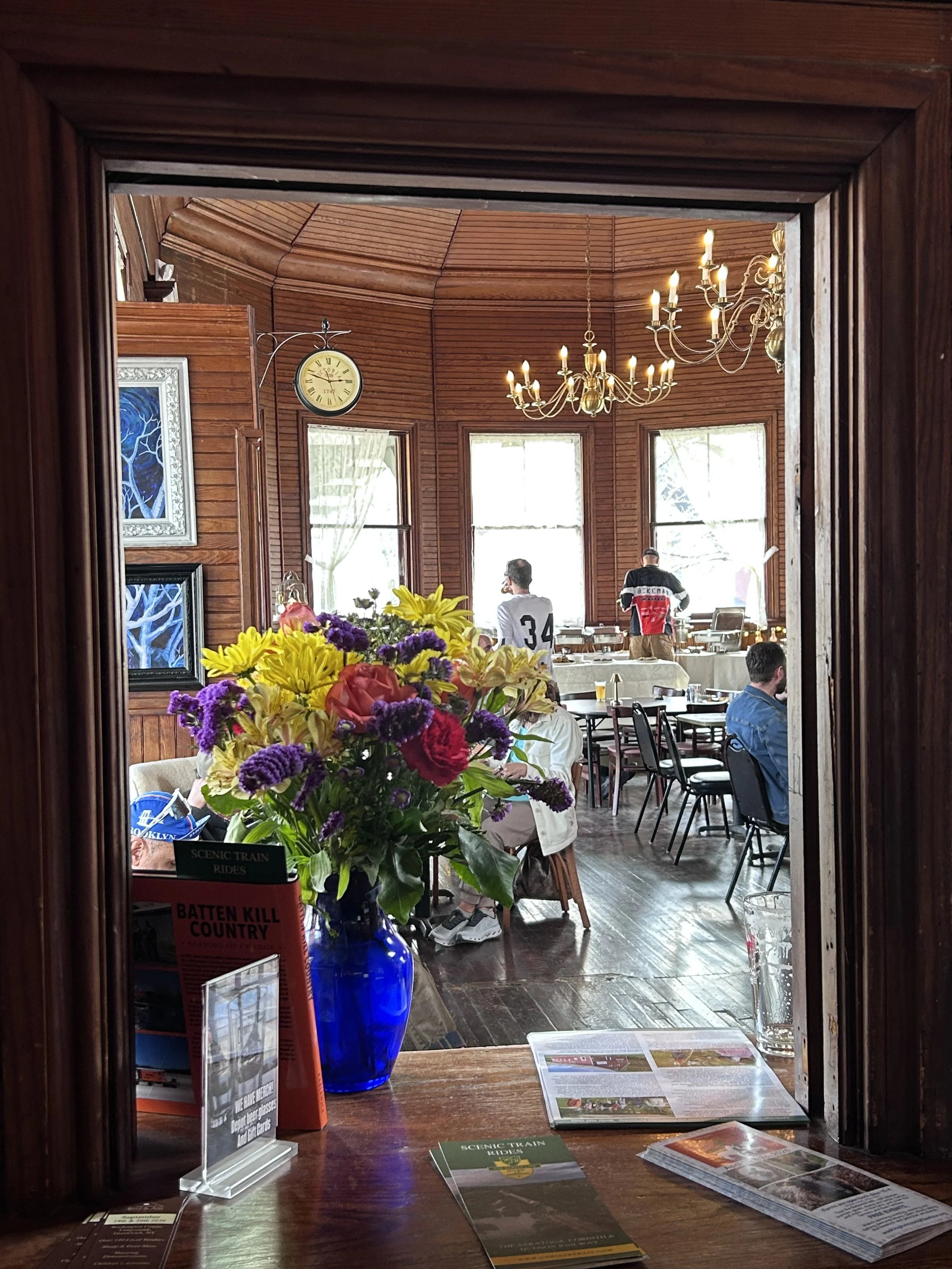
The finish party in downtown Cambridge, NY.
Bike stowed, clothes changed, and complementary pint glass collected, finishers were ushered into the old Cambridge train stop and Argyle Brewing Company for a free beverage and warm food. What a beautiful building to host a finishing event. After collecting an IPA from the cheerful bartender and a heaping plate of macaroni and cheese, I sat down and reflected on an event well-run. Two seventy-mile gravel rides in seven days. Three states. One road bike. But all great things must come to an end and I loaded up the car and headed back to Pennsylvania. Shortly after leaving the rain came, but briefly.
I thought about the Velo News article more on the hours-long drive home. I don’t think the East Coast is falling behind in the gravel scene; we like the small communal events. Sure there are rides and races that have nearly one thousand people in the Atlantic region (think established races like Black Fly Challenge, UnPAved, or Battenkill Race), but mostly it’s smaller events or unique racing formats. Here I was, glowing from having finished a challenging course thinking how great it’s been to complete quality gravel events in 2026, and then an article comes out that directly contrasts the scene. East Coast gravel is doing its own thing. And I think we are all ok with that.